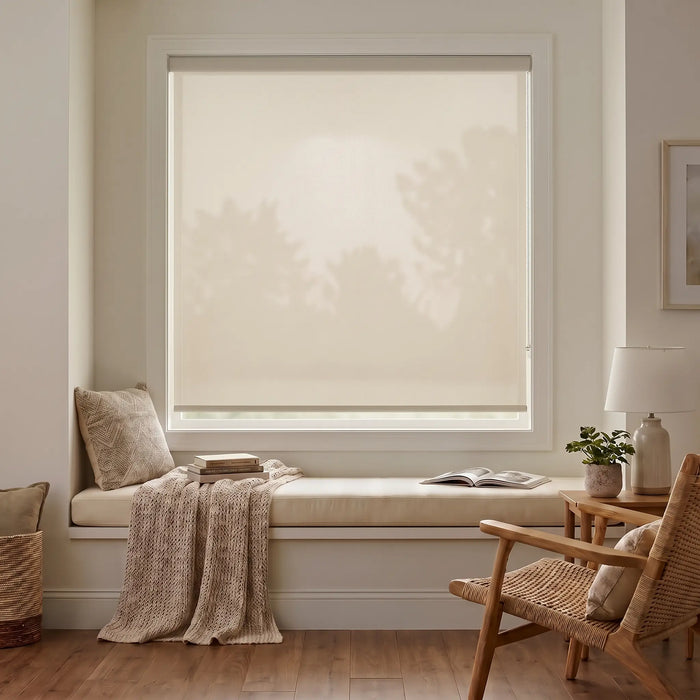
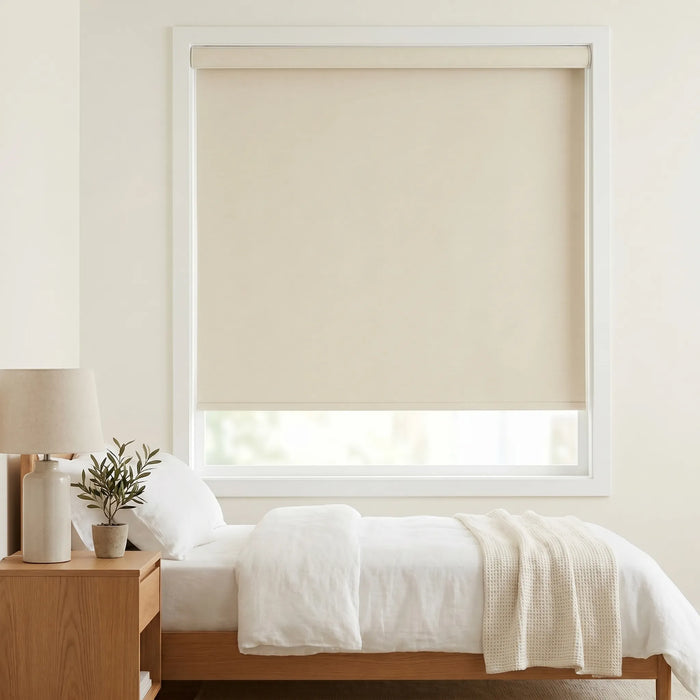
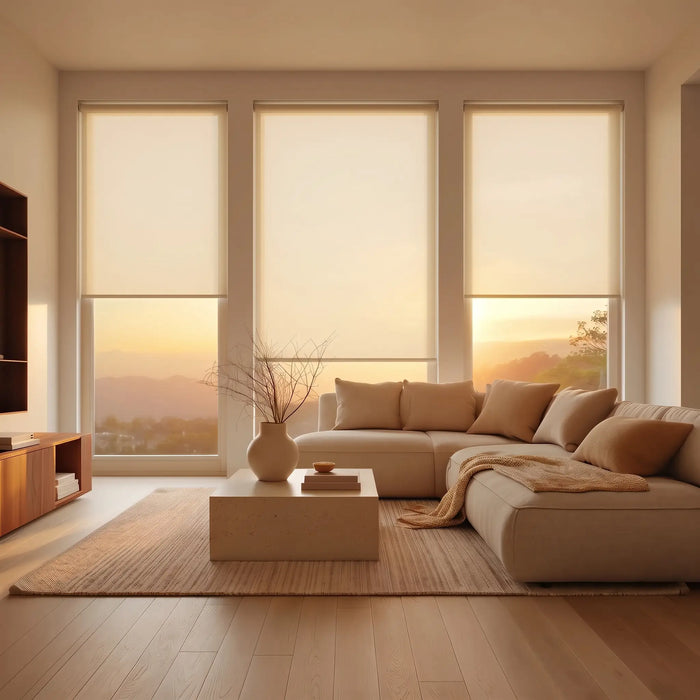
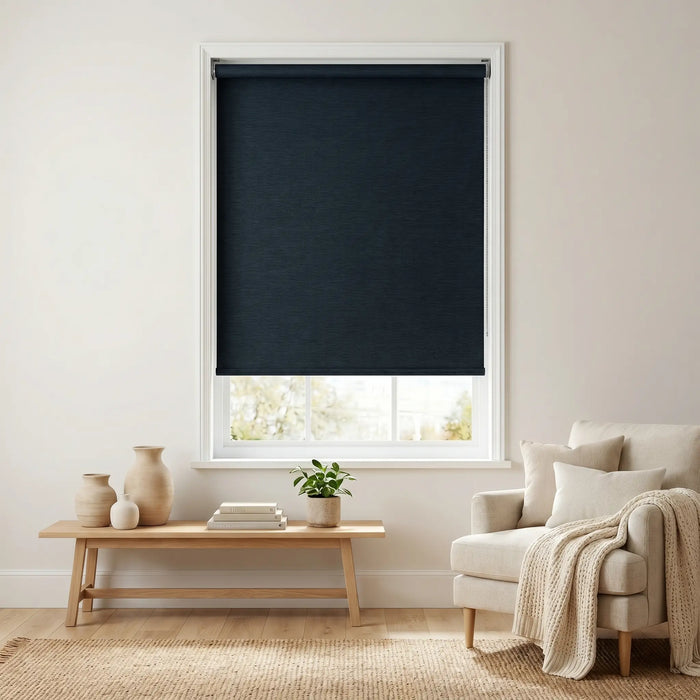
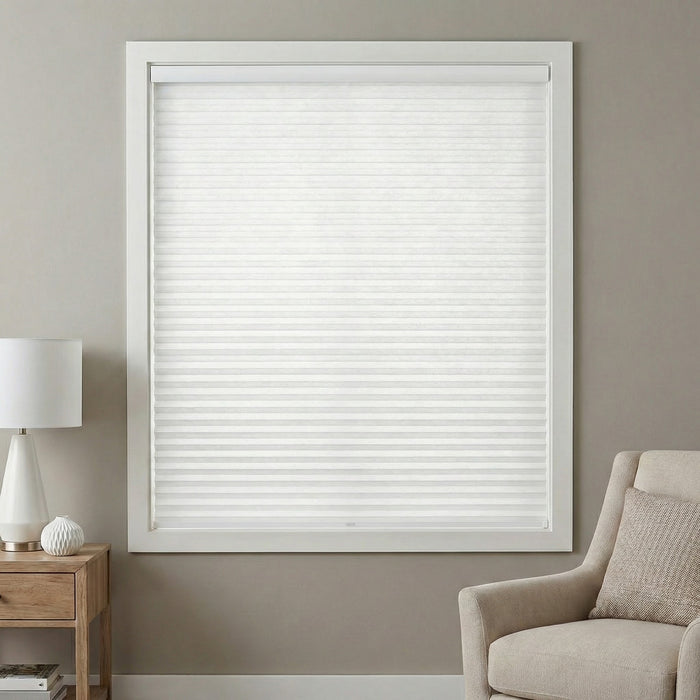
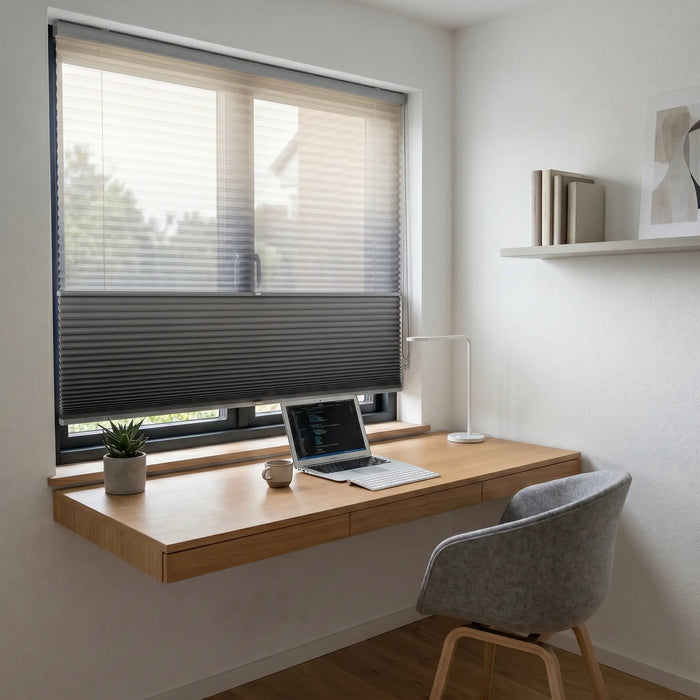
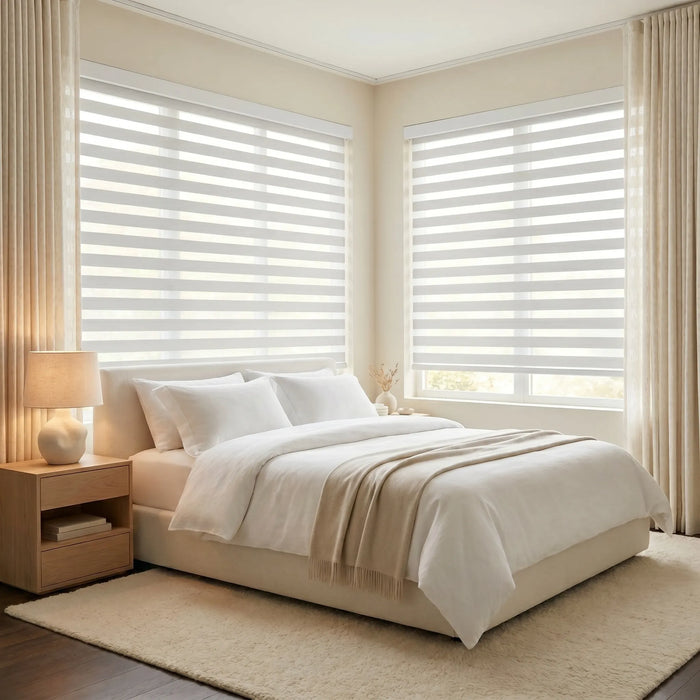
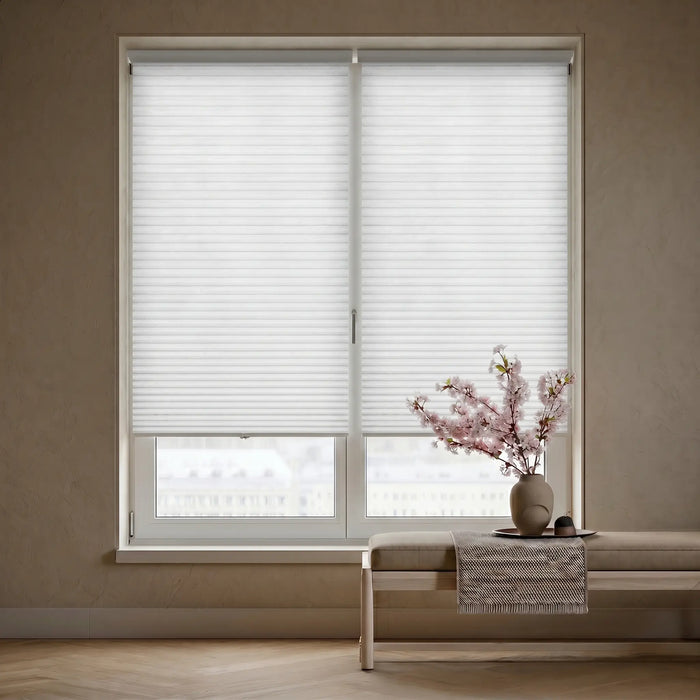
What separates a good Roman shade from a limp one is on the back of the panel: batten spacing, ring alignment, the liner and the weight of the hem bar. Get those right and the folds stack in even, parallel lines. We sew every panel to your finished size, with battens spaced for the drop you ordered, so it holds its shape better than a cut-down stock size. Roman shades and Roman blinds are the same product: British and Australian retailers say blinds, most US retailers say shades.
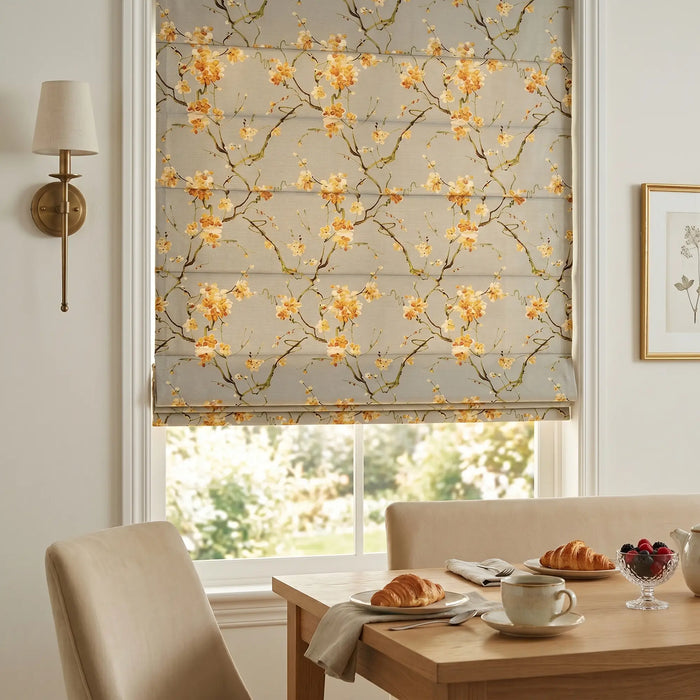
We build them in three lines: Essential, Artisan and Luxury. They differ only in fabric, from solid neutrals to designer prints to premium textures. Every fold, liner and lift option below applies to all three.
Choosing a Fold Style
Fold style does more to change the character of a window than fabric color does, so choose it first. Three constructions cover everything we make.
Flat Fold
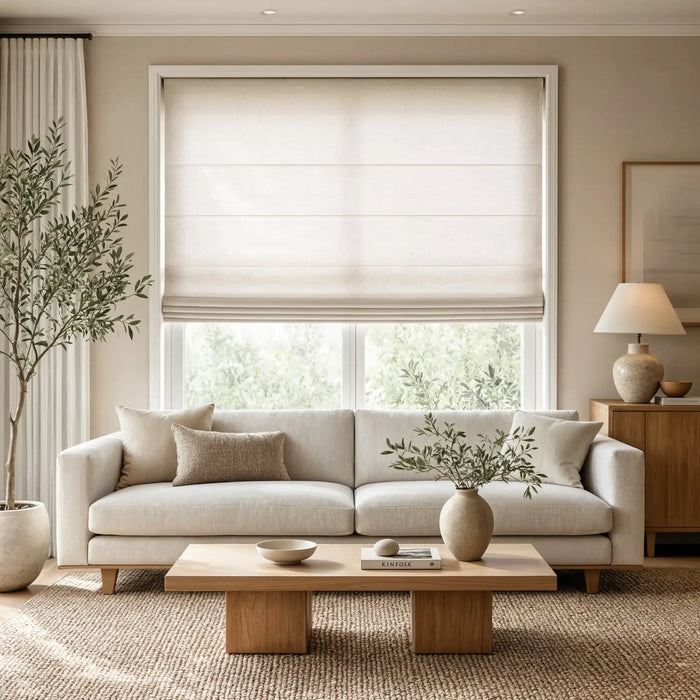
A smooth, uninterrupted tailored panel. Lowered, the face is one clean plane with no visible seams or battens, so it suits a large-scale print, a woven texture or a linen you want read as one sheet of cloth. It is the default in modern interiors and uses the least fabric of the three.
Plain Fold
The classic pleated Roman. Battens are sewn in at each fold line, so the pleats stay visible even when the panel is fully down and the face reads as stacked bands. Plain Fold is forgiving of a slightly uneven header, holds its line in heavier fabrics, and suits transitional and traditional rooms.
Soft Fold
Hobbled construction, with soft draping down the face. Permanent loops of cloth cascade whether the panel is up or down, giving a deep, upholstered look. Expect a taller stack: a Soft Fold uses noticeably more material than a Flat Fold of the same finished size.
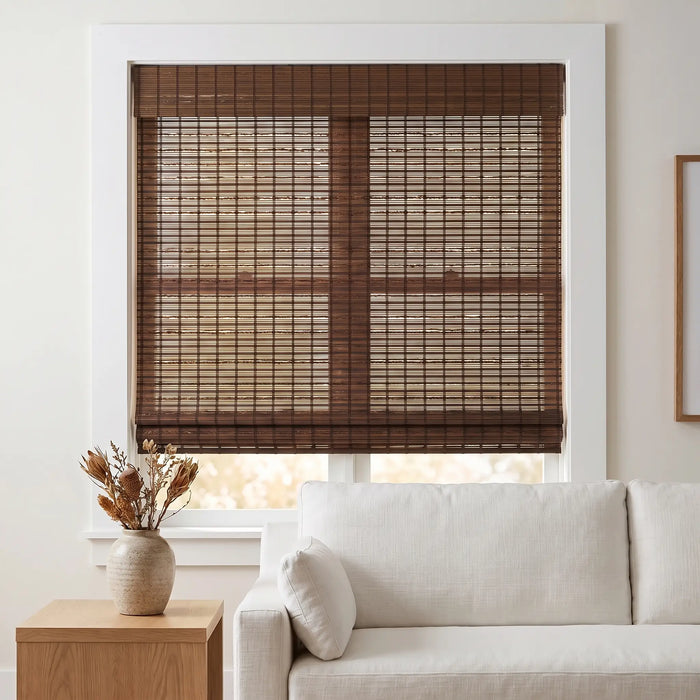
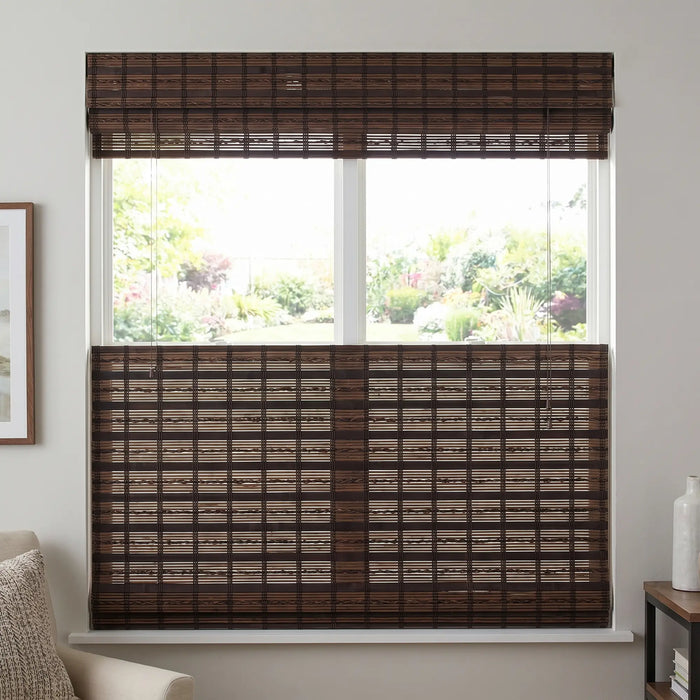
These fabric folds don't split into two moving rails. If you want the top-down/bottom-up function, daylight above and privacy below, that is built into our cordless woven wood shades instead, and the top-down/bottom-up range shows the other materials it comes in.
Fabric, Liner and How Much Light Gets Through
Light control is set by two things: the openness of the face cloth and the liner behind it. An unlined panel in a loose linen glows in the sun and gives daytime privacy without darkness. We offer three liners. Standard Light Filtering keeps that glow while cutting glare and slowing fading of the face fabric. Thermal Sateen is the step up: it blocks more light and adds insulation. Premium Blackout stops light through the panel entirely.
One honest caveat: the panel can be opaque and the window still will not be dark. An inside-mounted panel has to be built narrower than the opening so it can travel freely, which leaves a small light channel down each side. Three fixes work. Mount outside the frame, with two to three inches of overlap on each side and six to eight inches above the opening. Add side channels or a returned valance. Or run a blackout roller shade behind the panel, with the Roman as the decorative layer.
Fabric weight matters too. A heavy velvet or a lined wool builds a deeper stack and needs a sturdier mounting board. Performance polyester and cotton-linen blends are the workhorses: they hold a fold and clean up more forgivingly than silk.
Lift Systems: Cordless, Continuous Loop and Motorized
Cordless lift uses a spring-assisted mechanism in the headrail: you raise and lower the panel by the hem bar, and it holds wherever you leave it. No cord hangs anywhere, which is the right default in homes with children or pets. A continuous cord loop runs over a clutch and is tensioned to the wall, giving mechanical advantage on a tall or heavy panel while staying anchored. Motorized lift suits high transoms and stairwell windows and puts several shades on one schedule, with wand-operated Motorwand, remote or app control.
Room by Room: Where Roman Shades Fit
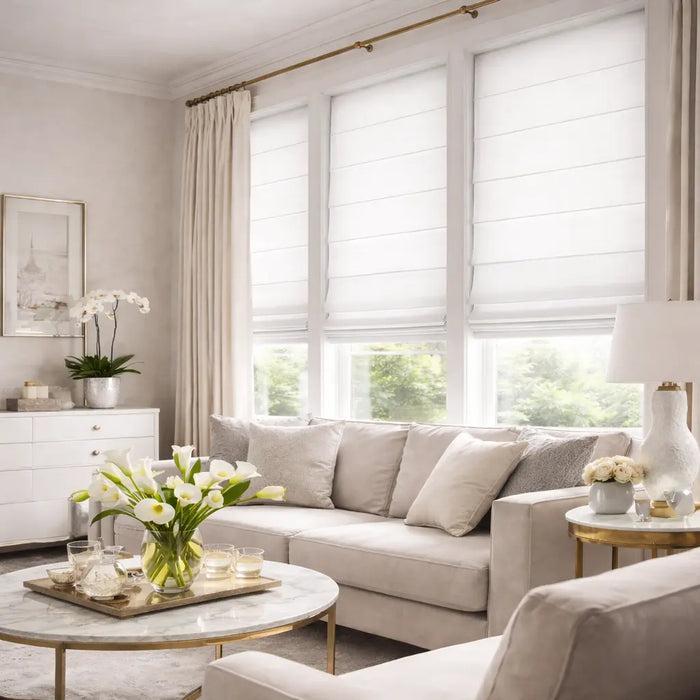
In a living room, Roman shades are the layer that makes a window look finished: inside the frame with drapery panels flanking them, or outside the frame on a wide opening where the fabric reads as one block of texture. In bedrooms, order Premium Blackout and mount outside the frame for a genuinely dark room.
Kitchens work with the right fabric and placement. A performance weave that wipes down is fine above a sink. A shade directly above a cooktop is a mistake: grease and steam shorten fabric life and invite mildew in the lining, so put faux wood blinds over a range.
Bathrooms split the same way. A powder room takes a fabric shade happily; a full bath with a daily hot shower does not, because the panel absorbs moisture and can mildew along the hem. On French doors, order narrow panels with a shallow stack and hold-down brackets at the hem, so the shade cannot swing.
Measuring, Mounting and Care
Measure the opening at three heights and three widths, and work from the narrowest width and the longest height. For an inside mount, check the flat depth of the reveal. How much depth you need depends on the lift and valance you choose: cordless needs the least, continuous cord loop and motorized need more, and a valance adds more again. Give us the exact opening dimension and let the workroom take the deduction. An outside mount avoids the depth question: we build it to the exact size you order, with no deduction. Allow two to three inches of overlap on each side and mount the board six inches or more above the opening.
Take an old treatment down before you measure, since brackets and boards can steal an inch of usable depth. Our guide to removing blinds, Venetian, Roman and more covers how each common bracket type releases.
A fabric shade is heavy once board, battens and lining are added, so fix into the frame or into solid blocking. Vacuum the panel weekly with an upholstery brush on low suction. Spot-clean with mild detergent on a white cloth, blotting rather than rubbing, and test on the hem first. Never machine-wash a panel with battens and rings; the hardware tears the sewn channels. If the folds wander, lower the panel, hand-crease each fold along its batten line, then raise it and leave it up for a day or two.
 Skip to content


 22 colors available⭐ Most Popular(157)
 6 colors availableBest for street facing windows (9)
 3 colors available(6)